
What Are Those Black Streaks on Your North Carolina Roof—And Should You Clean or Replace?
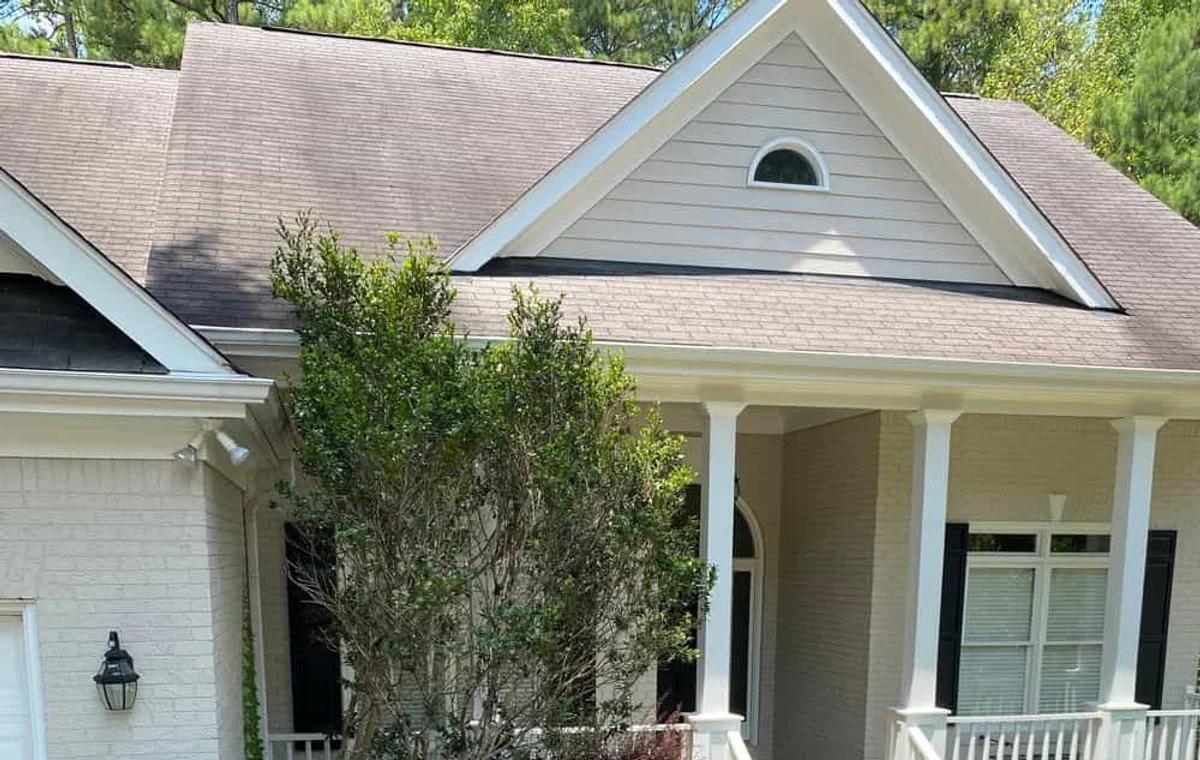
Black streaks on North Carolina roofs are caused by Gloeocapsa magma, an airborne cyanobacteria algae feeding on limestone filler inside asphalt shingles. ARMA-approved no-pressure soft washing kills the algae safely for roughly 3–5% of the cost of roof replacement, restoring curb appeal and extending shingle lifespan.
Meet Gloeocapsa Magma: Why Shingles Turn Black on the North Side First
Modern fiberglass asphalt shingles use crushed limestone filler for weight and fire resistance. In North Carolina's warm, humid air, windborne Gloeocapsa magma spores land on shaded north- and west-facing roof slopes and literally feed on that limestone—forming a dark UV-protective sheath that shows up as ugly black streaks.
Left alone, algae traps moisture and invites heavy green moss and lichen, whose root-like holdfasts pry shingle granules loose and shorten roof life by years.
Why You Should NEVER Pressure Wash a Shingle Roof
A high-pressure washer will immediately blast away the protective ceramic granules that shield your roof from Carolina UV rays and heavy summer storms. Instead, the Asphalt Roofing Manufacturers Association (ARMA) recommends low-pressure chemical soft washing (<60 PSI) to neutralize algae spores gently with zero mechanical abrasion.
Related Service
Roof Soft Washing ($350 – $750)
ARMA-approved no-pressure roof treatment that eliminates black algae streaks and moss while adding years to shingle life.